Working paper / Innovation
Patent Disclosure and Reliance on External Financing
R&R at Journal of Financial Economics
How the need for external financing shapes clarity and strategic obfuscation in patent disclosures.
Abstract
Patent disclosures involve a fundamental tradeoff between concealing information from competitors and revealing it to capital providers. Using large language models, we decompose patent disclosure complexity into fundamental complexity and strategic obfuscation for 2.6 million U.S. patents. Exploiting quasi-random examiner assignment, we show that obfuscation deters competitors by reducing citations and litigation but lowers patents’ marketability and usefulness as collateral. Three additional disclosure and financing shocks demonstrate that firms reliant on external finance produce clearer patent disclosures. Our findings identify a previously unexplored channel through which financing shapes innovation and the diffusion of technological knowledge.
Figures
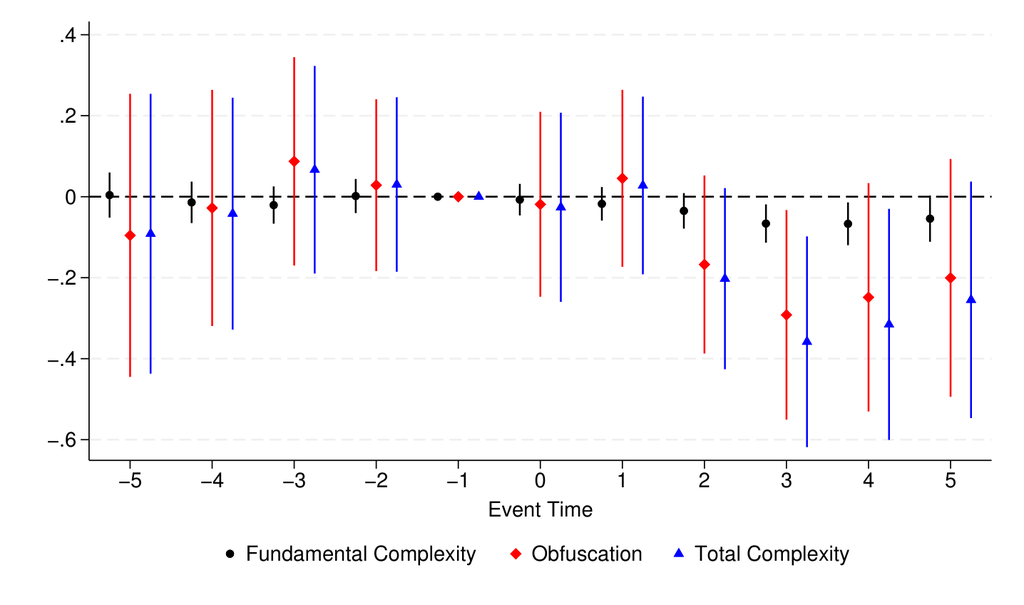
Patent disclosures become clearer after firms first pledge patents as collateral
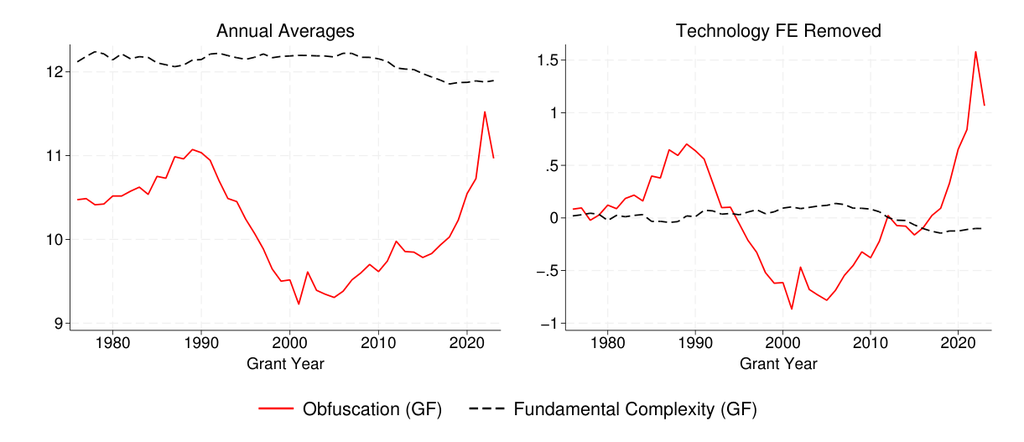
Patent obfuscation has risen since 2000 while underlying complexity stayed stable
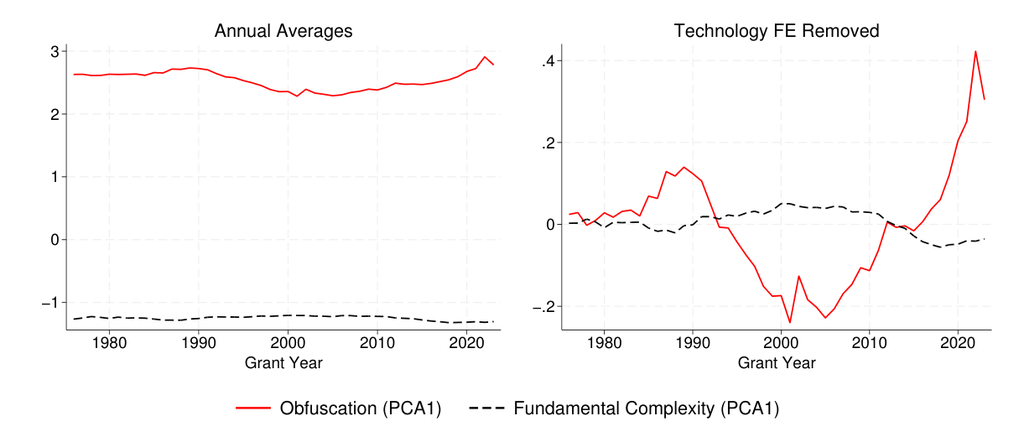
The rise in obfuscation persists with alternative readability measures
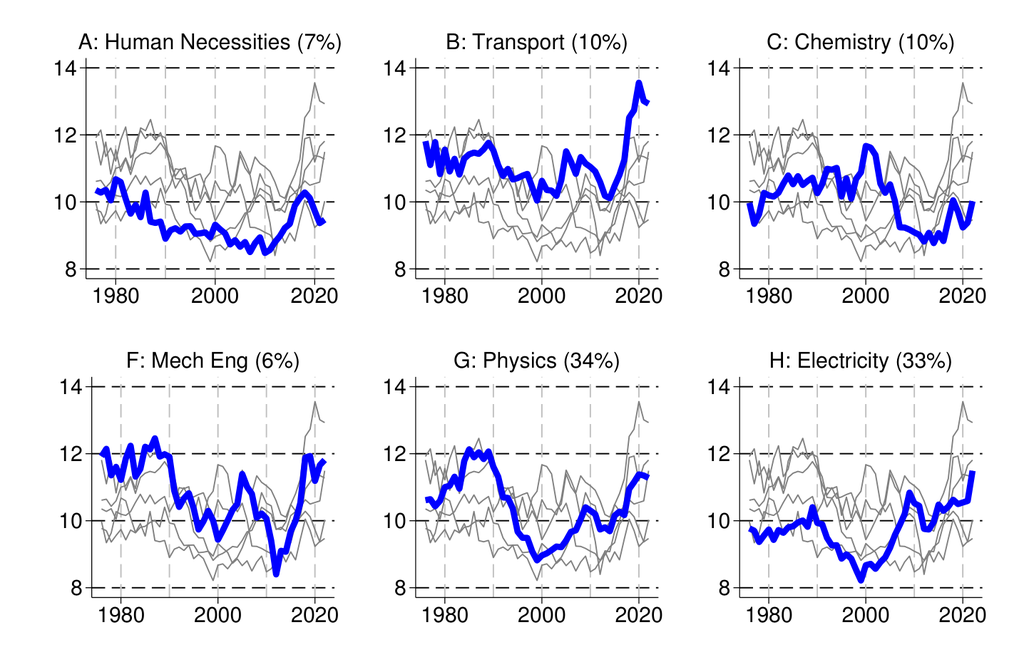
The post-2000 rise in obfuscation spans multiple technology fields
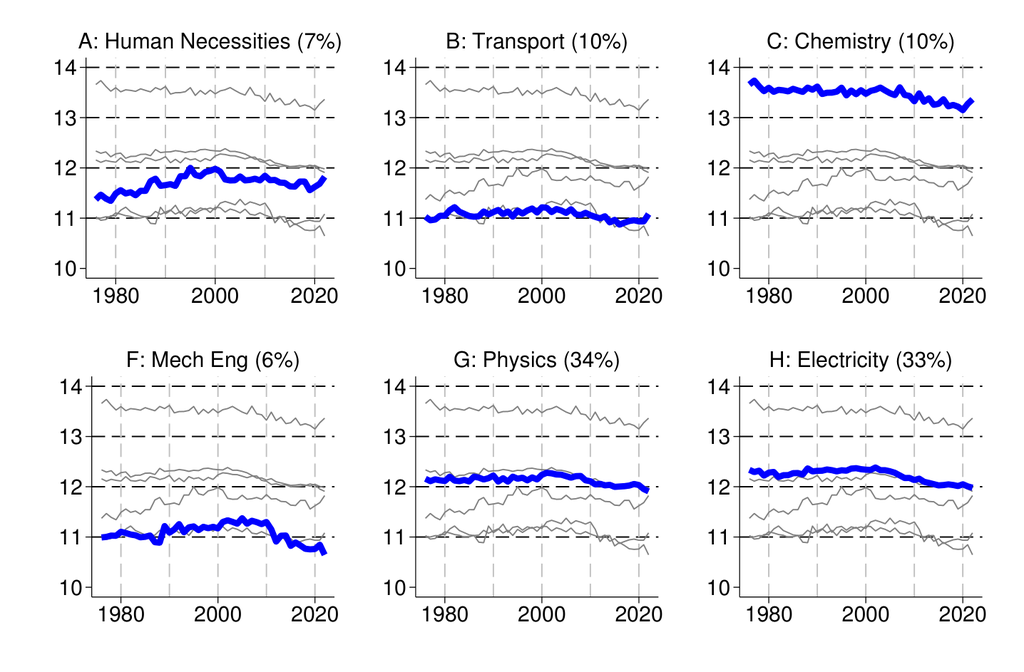
Underlying complexity differs across fields but stays fairly stable within each
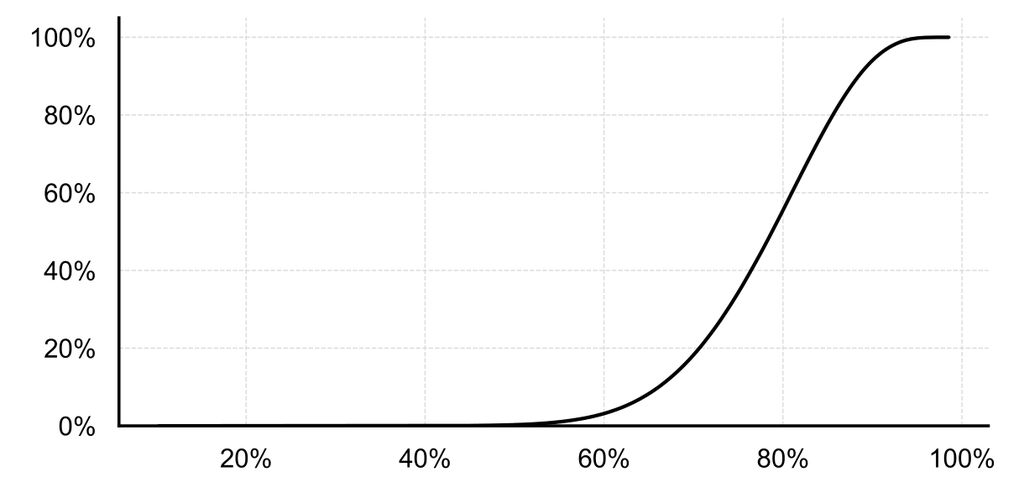
Most simplified abstracts have high semantic similarity to the originals
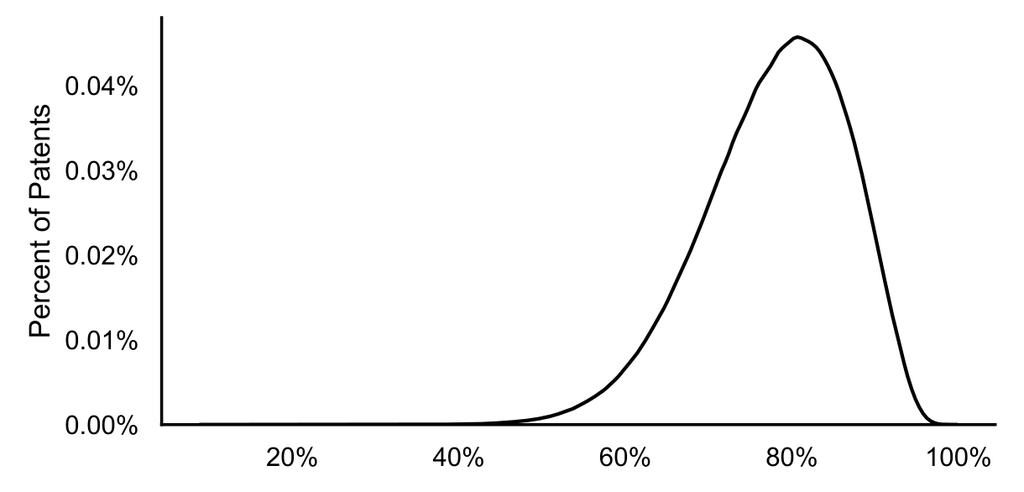
Original and simplified abstracts have similarity scores concentrated near 0.8